bur1alrites
A portfolio for Allie's live lighting work, with video-reactive visuals and a 3D projector room.
A site that reacts
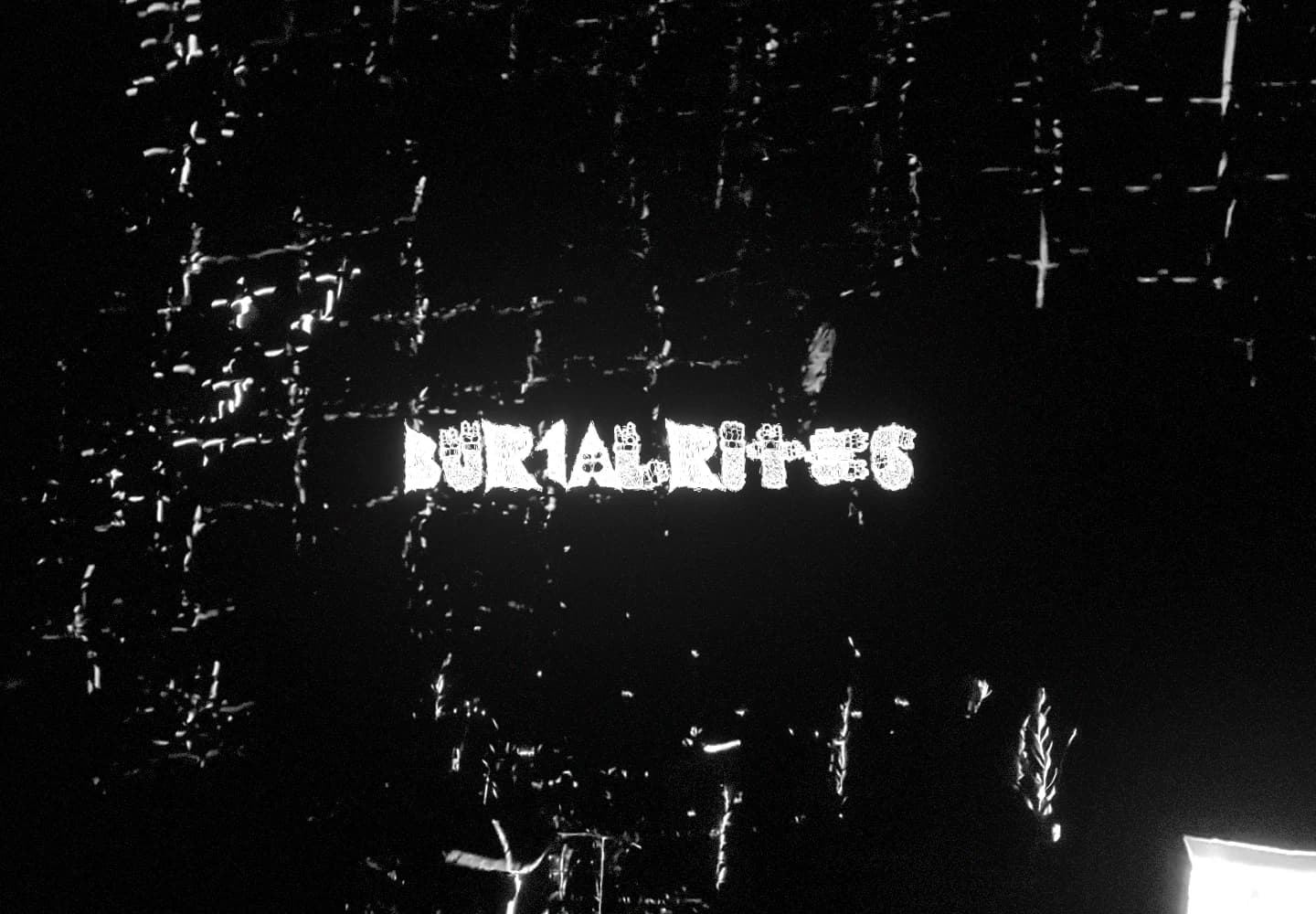
My friend Allie creates real-time, audio-reactive lighting for events. She wanted a site that responded like her shows.
I built a background that reacts to the video and the cursor, with splashes on click. Allie chose the typeface and shared sites she liked; those references gave us a starting point.
Moving through the work
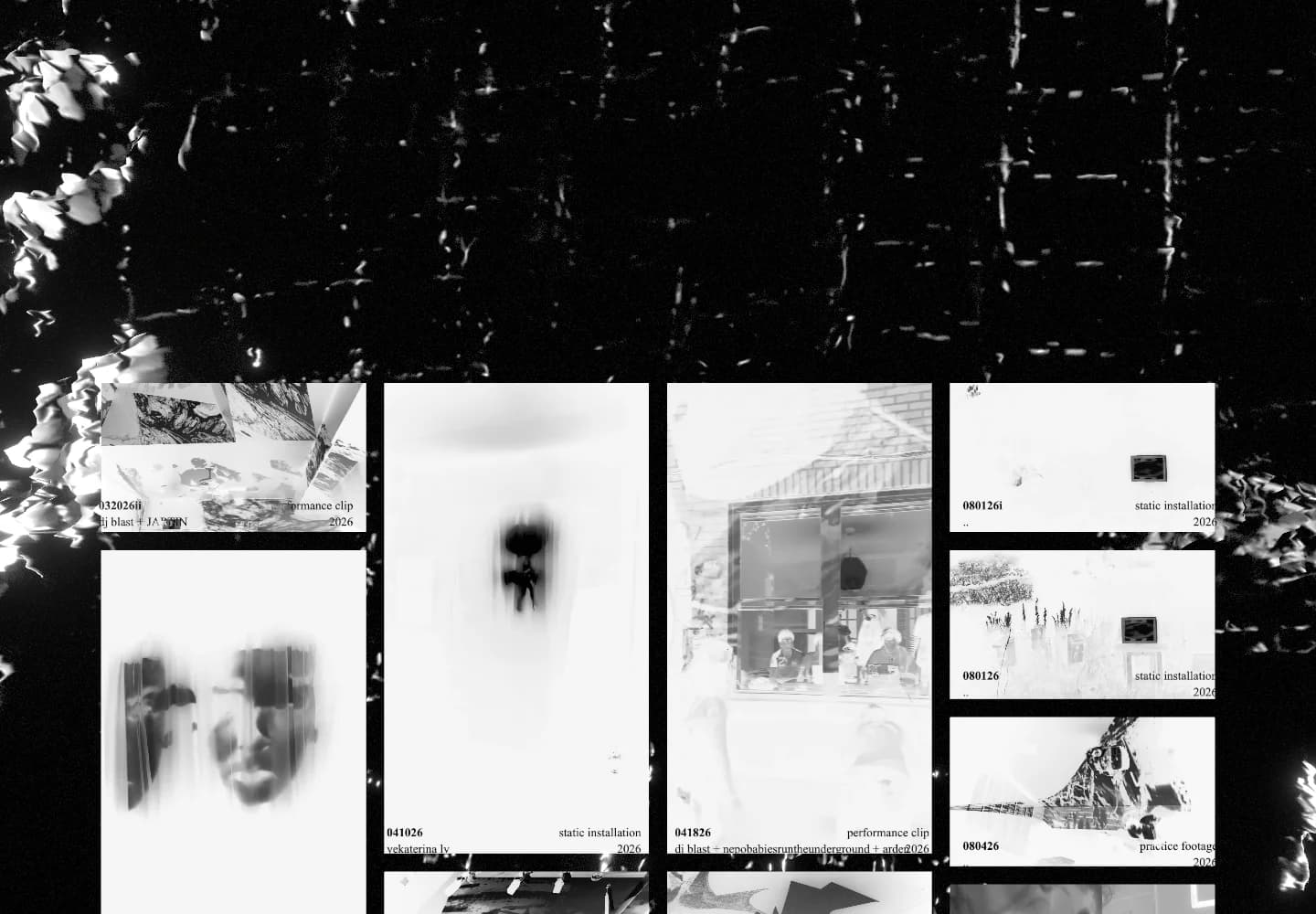
This was my first experiment with Three.js. I wanted the whole site to feel three-dimensional, including a slight parallax in the gallery. Inverted previews reveal their colour on hover.
The viewer is the conductor: moving the cursor, clicking the background, and choosing a clip all change the scene. I wanted that navigation to feel intuitive and satisfying.
The projector room
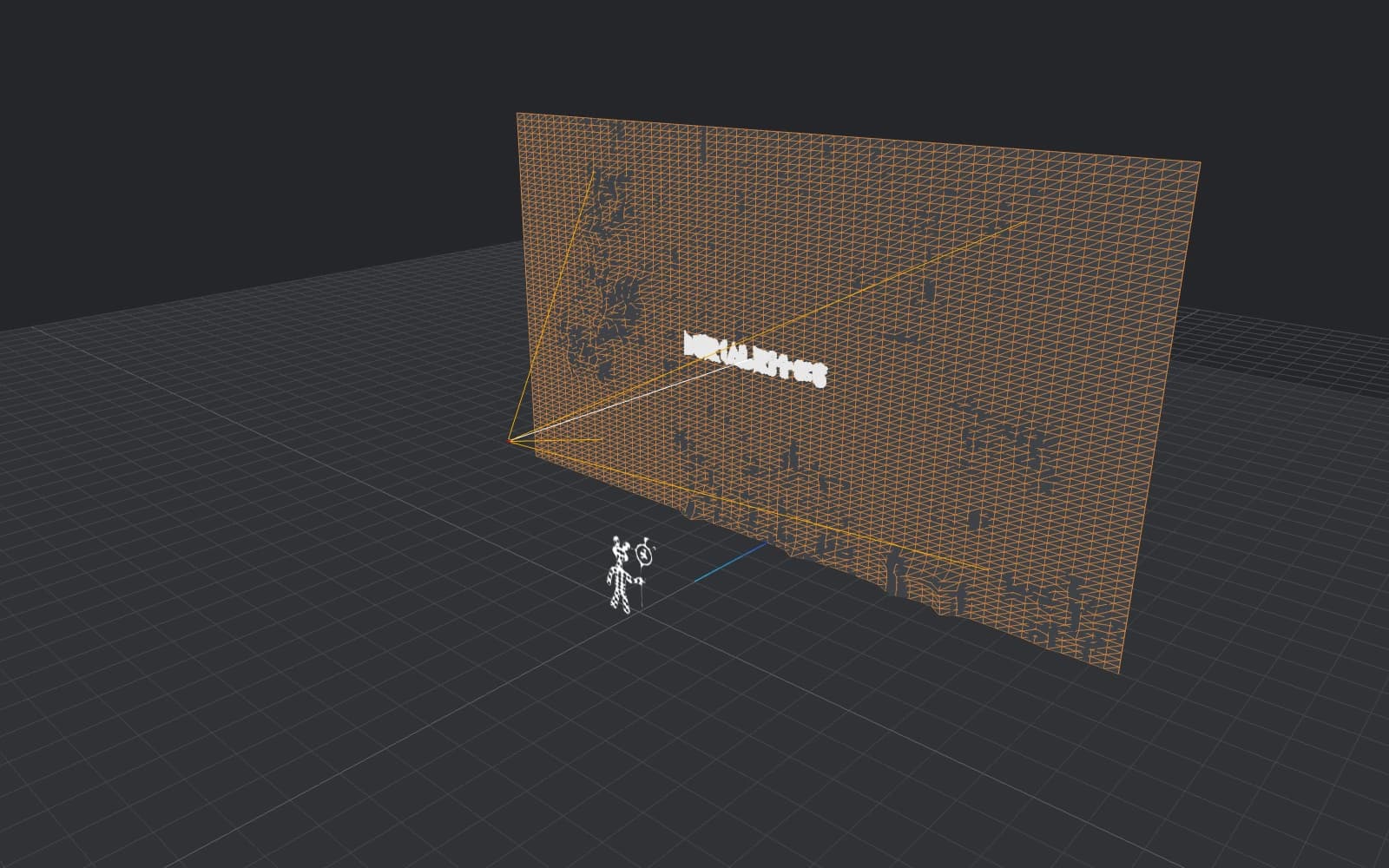
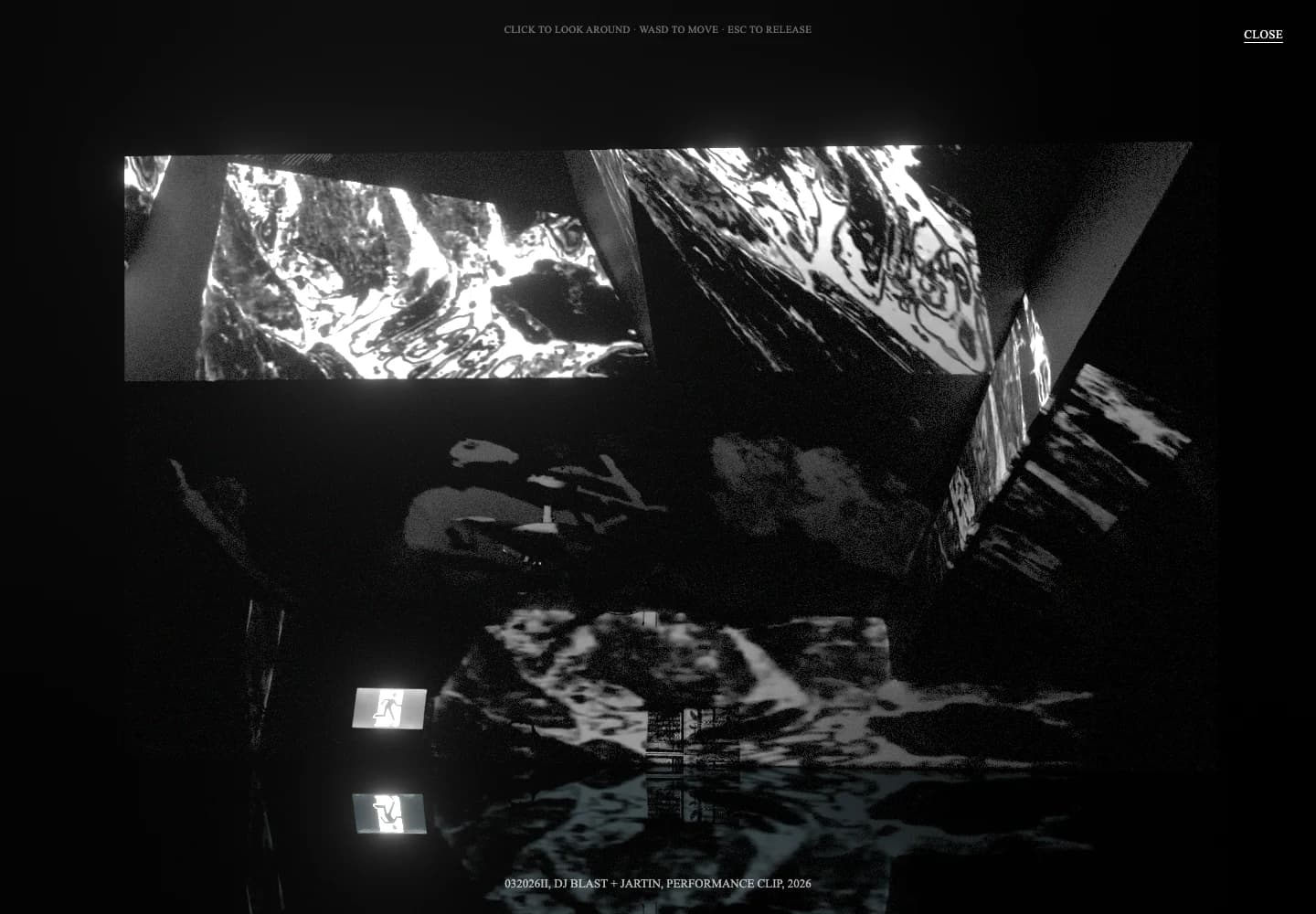
Opening a clip takes you into a room built around a projected image. Bloom lets the light spill beyond the screen.
The supplied footage was heavily compressed. I used animated grain to help mask the artifacts and give the projection its texture.
Keeping video light
An automated encoding pipeline prepares smaller playback versions while preserving the masters. Previews load around the visible part of the gallery and play on hover; video starts automatically where the browser permits it.
Three.js, through React Three Fiber, gives the gallery and projector room real depth and camera movement. React connects the scenes to navigation and playback state; Next.js keeps the public pages and admin routes in one app. HLS.js switches between compressed video renditions, keeping playback practical alongside the 3D rendering.